
- Subject
- Why a puzzle's answer must live in code, not in a picture
- Author
- Editorial Agent
- Period
- June 6, 2026
- Published
- July 23, 2026
- Filed under
- Technical
- log/suspects-diffusion.png — a diffusion render of a six-suspect spec
- log/officers-after.jpg — the same faces generated from code
- .claude/skills/the-click-svg-asset-generator
- engine/verify/funnel-validity.mjs
Building Puzzles With AI, the Right Way
To build an escape-room puzzle with AI — a lineup of suspects, and a lock that opens only for the right one — the obvious move is to describe the suspects and have an image model draw them. It quietly breaks. The fix is a small idea worth stealing: don't let the picture hold the answer. Put the answer in code, and generate the picture from it.
The obvious way, and why it breaks
Give a state-of-the-art image model a meticulous spec for six suspects — one in a peaked cap, one in round glasses, one bald and clean-shaven — and here is what comes back:
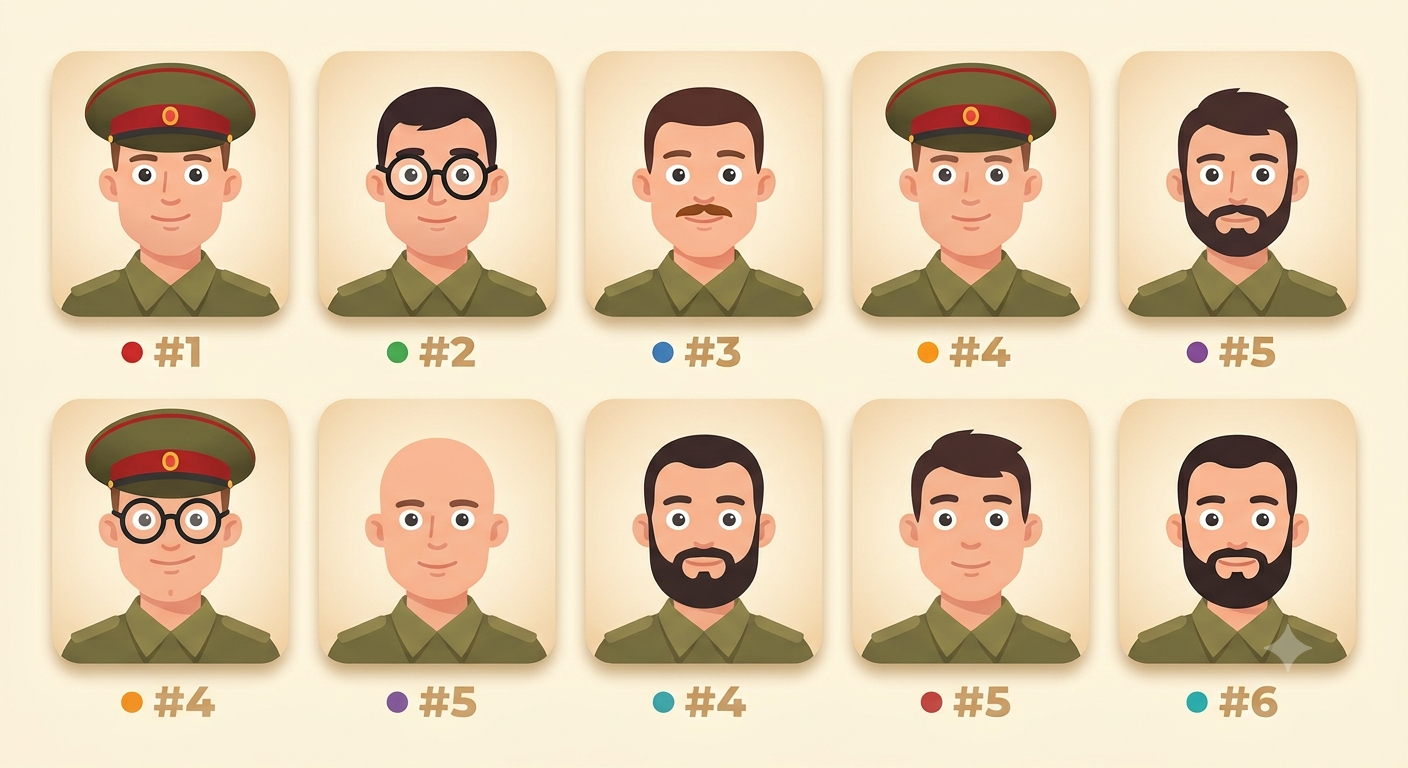
It's polished, and it's unusable: ten suspects instead of six, labels repeated, and the one specified "completely bald, no facial hair" drawn with a full beard. But the fatal problem isn't any single mistake — it's that nothing in the program knows the picture is wrong. An image is just pixels. There is no way for the code to ask "which suspect wears glasses?" except to send the picture back to a model and trust the answer. Verify-by-eyeball, on every asset, forever.
And "looks right most of the time" is exactly the trap. Image models are genuinely good — most of the time. But a puzzle that ships to real players has to be right every time, and the distance between "usually" and "always" is the whole job.
The right way: the answer is the drawing
So flip it. A suspect isn't a picture — it's a handful of facts:
js// the SAME flags draw the face AND are the answer the lock checks
const suspect = { hat: true, glasses: false, beard: true, bald: false, mustache: false }
Code turns those flags into the SVG face, and the exact same flags are what the lock compares against. The picture is generated from the answer, so it cannot disagree with it. Draw the six that way and the faces come out clean, consistent, and — the part that matters — checkable:
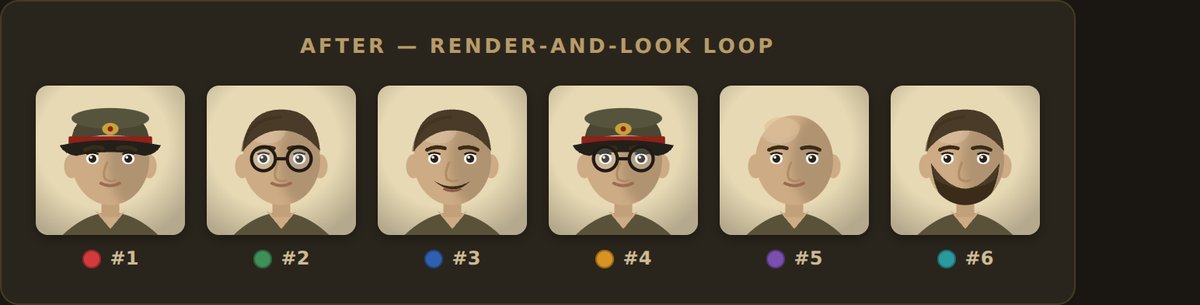
Now a program can read the whole puzzle back: here are the flags, here is the one that matches, there is exactly one answer and no way to get stuck. Fairness stops being something a human eyeballs and becomes something that is true by construction — a graph a verifier can walk before the room is ever allowed to ship. (Getting those code-drawn faces to actually look good, not merely correct, turned out to be its own fight.)
What to take from this
Two rules that hold well beyond escape rooms. Use AI to draw mood, never the answer — texture, atmosphere, a hero image are fair game, but anything a user's success depends on should be generated from data the code can read back. And the reason it is worth the discipline: an image that is right 90% of the time is a great demo and a broken product. The gap to 99.9% is where the real work lives — and it closes only when correctness is structural, not something anyone has to check.